The NSW Resources Regulator reports on an incident including a catastrophic tyre failure and highlights a confronting reality for our industry — how quickly a tyre inspection can escalate into a life-altering event.
The incident occurred at a quarry workshop involving a B-double semi trailer. A flat tyre had been identified on the inside rear axle, and two workers began inspecting it for a suspected air leak. During the process, the tyre was being inflated when the sidewall suddenly ruptured, resulting in a catastrophic failure.
The explosion released a powerful air blast and debris, injuring both workers. Reported injuries included perforated eardrums, hearing loss, and eye injuries caused by fragments.
Investigations later pointed to structural weakening of the tyre — likely from operating while underinflated or flat — a condition that can lead to what’s known as a “zipper failure” during reinflation.
Check out the full investigation report here - Animation released following catastrophic tyre failure | NSW Resources
A Critical but Often Overlooked Risk
What makes this incident particularly important is not just the failure itself — but what it represents.
On multi-axle combinations like B-doubles, tyres don’t operate in isolation. When one tyre on an axle is compromised or run flat, the adjoining tyre is forced to carry significantly increased load. Even if it appears intact, its structural integrity may already be weakened.
This creates a hidden danger:
- The secondary tyre may have experienced overloading stress
- Internal damage may not be visible externally
- Re-inflation without proper precautions can trigger failure
In simple terms — if one tyre fails, the other is immediately at risk too
The Importance of Controlled Deflation
One of the key learnings from incidents like this is the importance of fully deflating tyres before inspection, removal, or reinflation — particularly when damage is suspected.
Failing to do so leaves stored energy in the system, and as this case shows, that energy can be released violently and without warning.
Just as importantly:
Both tyres on the axle should be treated as compromised
Deflation should be controlled, not manual or improvised
Distance and safety barriers should always be considered
Where the Right Equipment Makes the Difference
While procedures and training are critical, the reality is that without the right tools, even experienced teams are exposed to unnecessary risk.
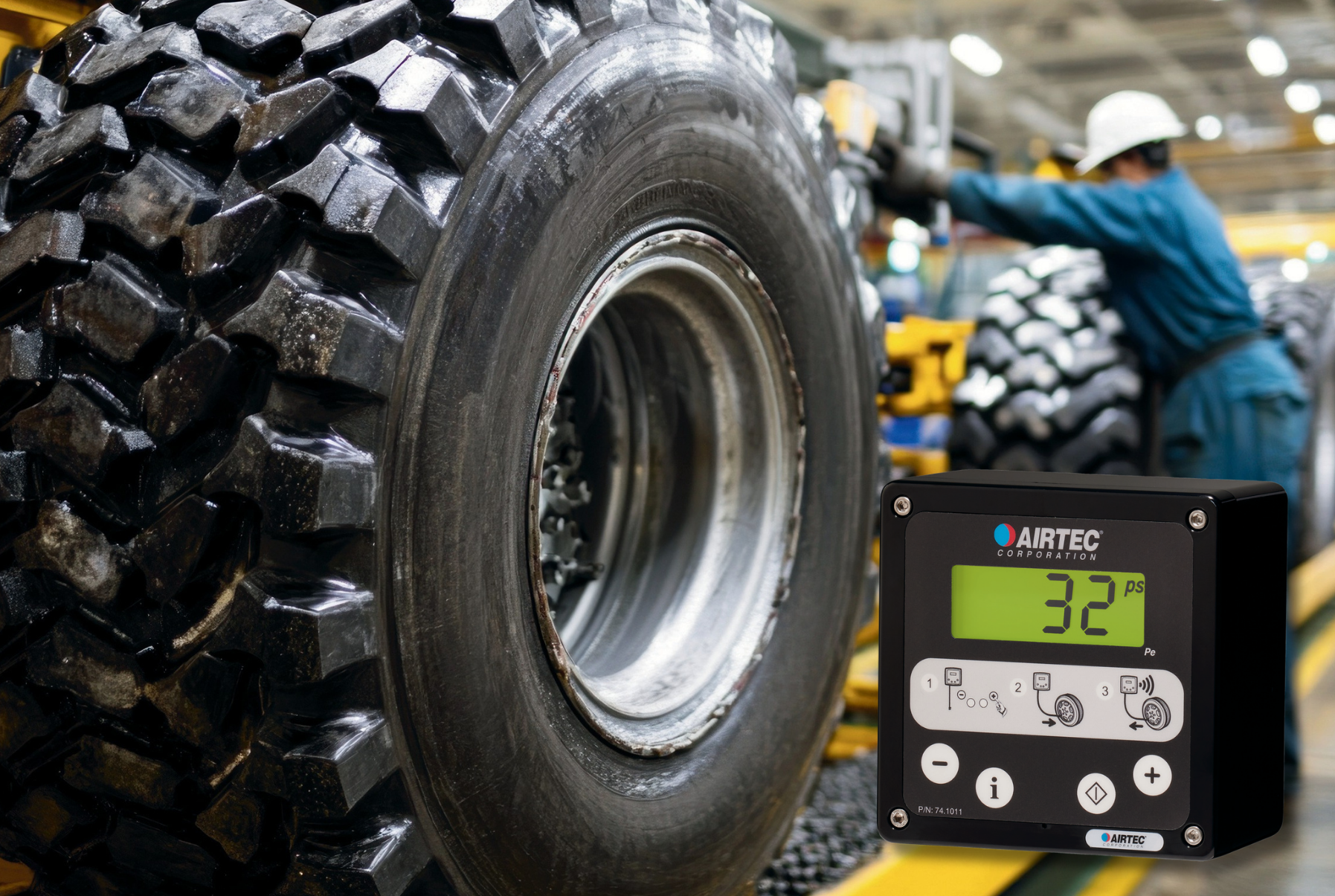
This is where purpose-built equipment becomes essential.
Airtec’s MXA inflators are designed with workshop safety front of mind, including:
- Integrated deflate functionality to safely release pressure
- Controlled inflation and deflation processes
- Reduced need for manual intervention in high-risk situations
This isn’t just about convenience — it’s about removing uncertainty and minimising exposure to stored energy hazards.
Learn more about our range of inflators suitable for workshops
Turning Incidents into Industry-Wide Learning
The purpose of sharing incidents like this isn’t to assign blame — it’s to highlight how easily these situations can occur, particularly in busy workshop environments. Without clear procedures, proper equipment, and an understanding of how tyre damage can propagate across an axle, even routine maintenance tasks can carry significant risk.